
Call us
301-363-4651 (Available 9 a.m. to 5 p.m. CST from Monday to Friday)

| Code | CSB-RA010418A56acHU |
| Size | US$210 |
| Order now | |
| Image |
|
| Have Questions? | Leave a Message or Start an on-line Chat |
| Application | Recommended Dilution |
|---|---|
| WB | 1:500-1:2000 |
| ICC | 1:50-1:500 |
| IF | 1:30-1:200 |
Acetylation of histone H3 at lysine 56 represents a critical epigenetic modification positioned within the globular core domain of the histone, where it directly influences DNA-histone interactions and chromatin accessibility. This modification plays essential roles in DNA replication, repair, and transcriptional regulation, making it a key target for researchers investigating chromatin dynamics, cell cycle progression, and epigenetic mechanisms underlying disease states.
This recombinant monoclonal antibody, clone 3H2, offers the reproducibility and consistency that demanding epigenetic studies require. Produced using recombinant technology with a defined sequence, this rabbit IgG eliminates the lot-to-lot variability that can compromise longitudinal studies and multi-site collaborations. The sequence-defined nature ensures that your experimental conditions remain transferable across projects and publications.
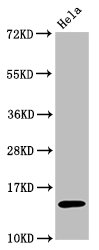
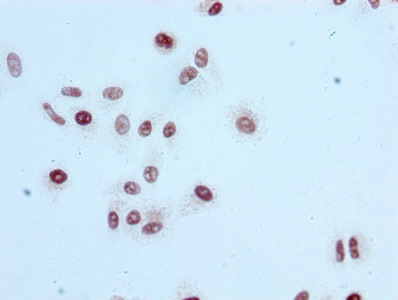
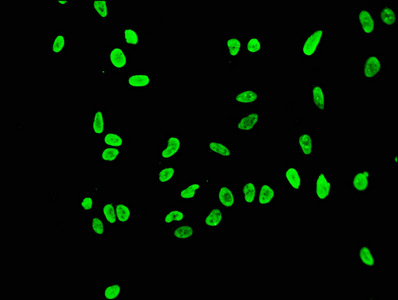
Validation across multiple applications demonstrates the flexibility this antibody provides for your research workflow. Western blot analysis in HeLa whole cell lysates treated with sodium butyrate reveals clean detection at the expected 15 kDa band size, confirming specificity for the acetylated histone target. Immunocytochemistry performed on HepG2 cells using the Leica Bond system shows robust nuclear staining, while immunofluorescence in sodium butyrate-treated HeLa cells displays clear nuclear localization when counter-stained with DAPI. The antibody performs effectively across recommended dilution ranges, with western blot applications working well at 1:500-1:2000 and immunofluorescence at 1:30-1:200.
For researchers exploring epigenetics and nuclear signaling pathways, this antibody provides a reliable tool for investigating acetylation-dependent chromatin remodeling, histone chaperone function, and the interplay between histone modifications and genome stability in human cell models.
There are currently no reviews for this product.





